
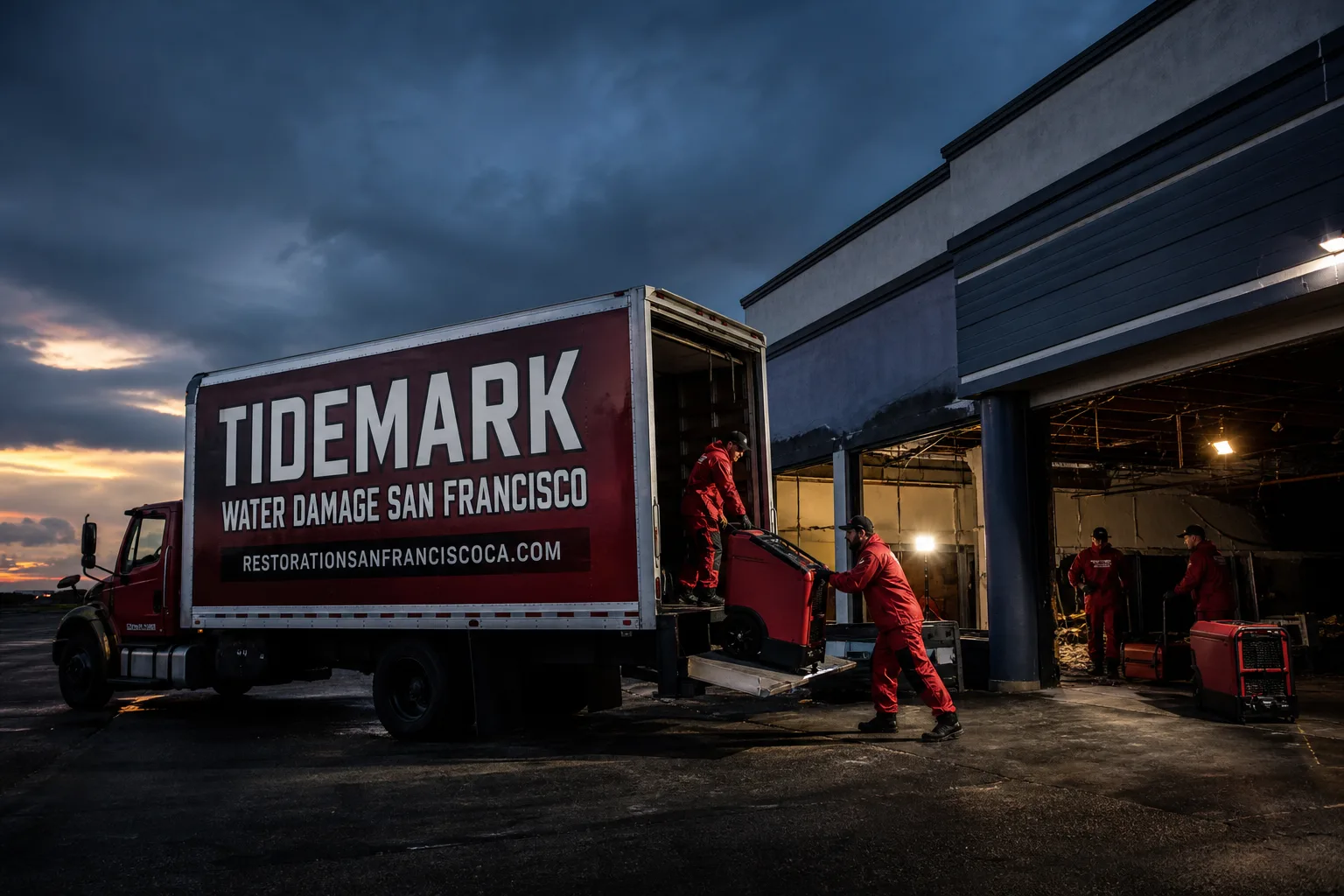
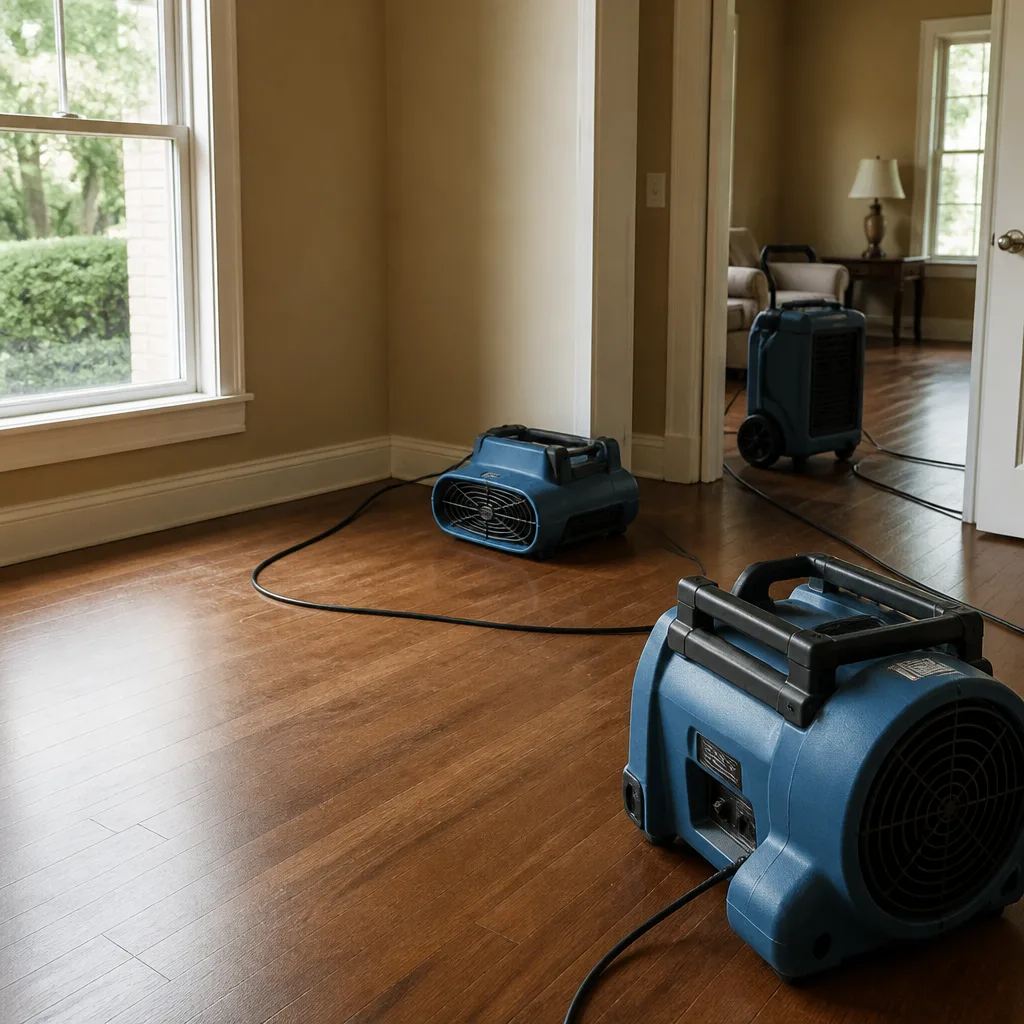
 Water damage drying
 Fire & smoke cleanup
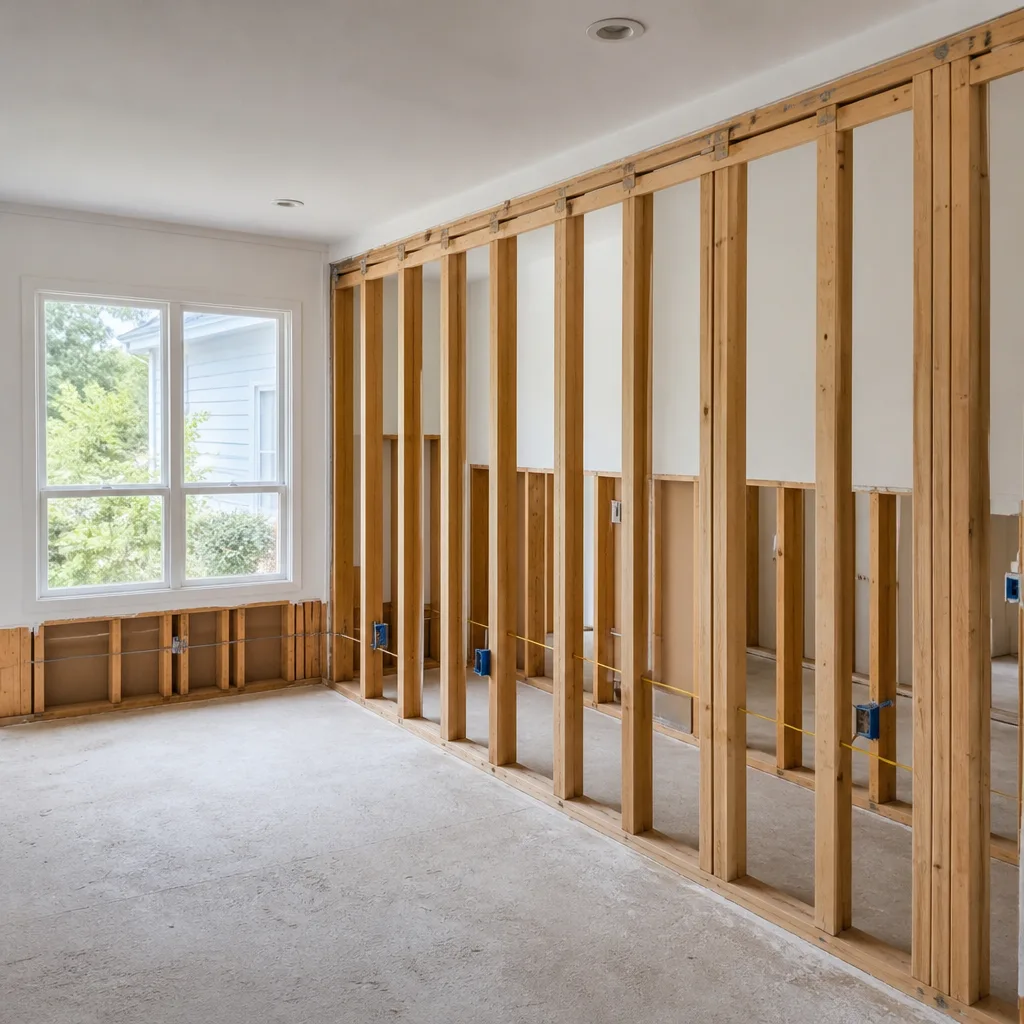 Mold remediation
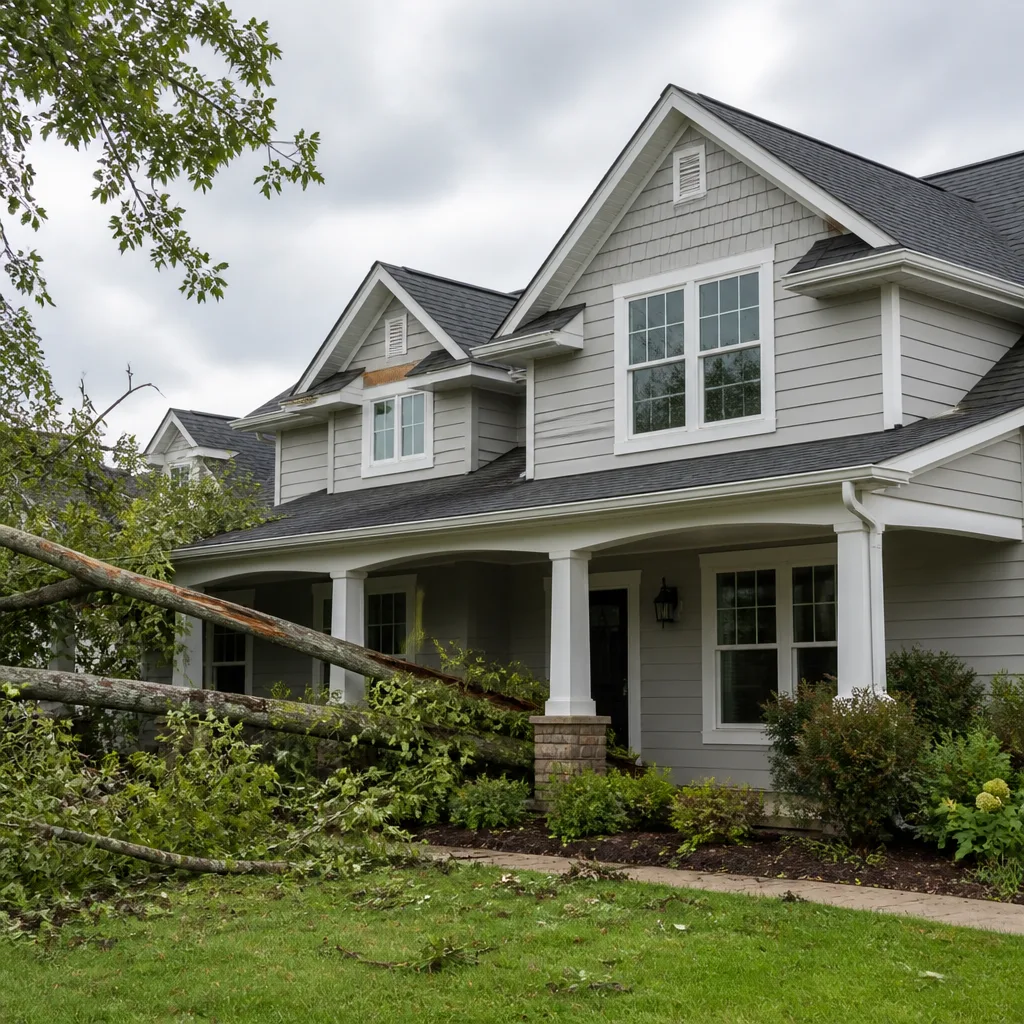 Storm response
 Sewage cleanup
 Reconstruction
Free visual inspection and a written scope of work before any mitigation begins - photos, moisture readings, and drying logs go in your claim file
The scope we write is the scope we bill. Anything new gets shown to you, in writing, before we touch it.
Get your free estimateRestoration work we handle
See the difference
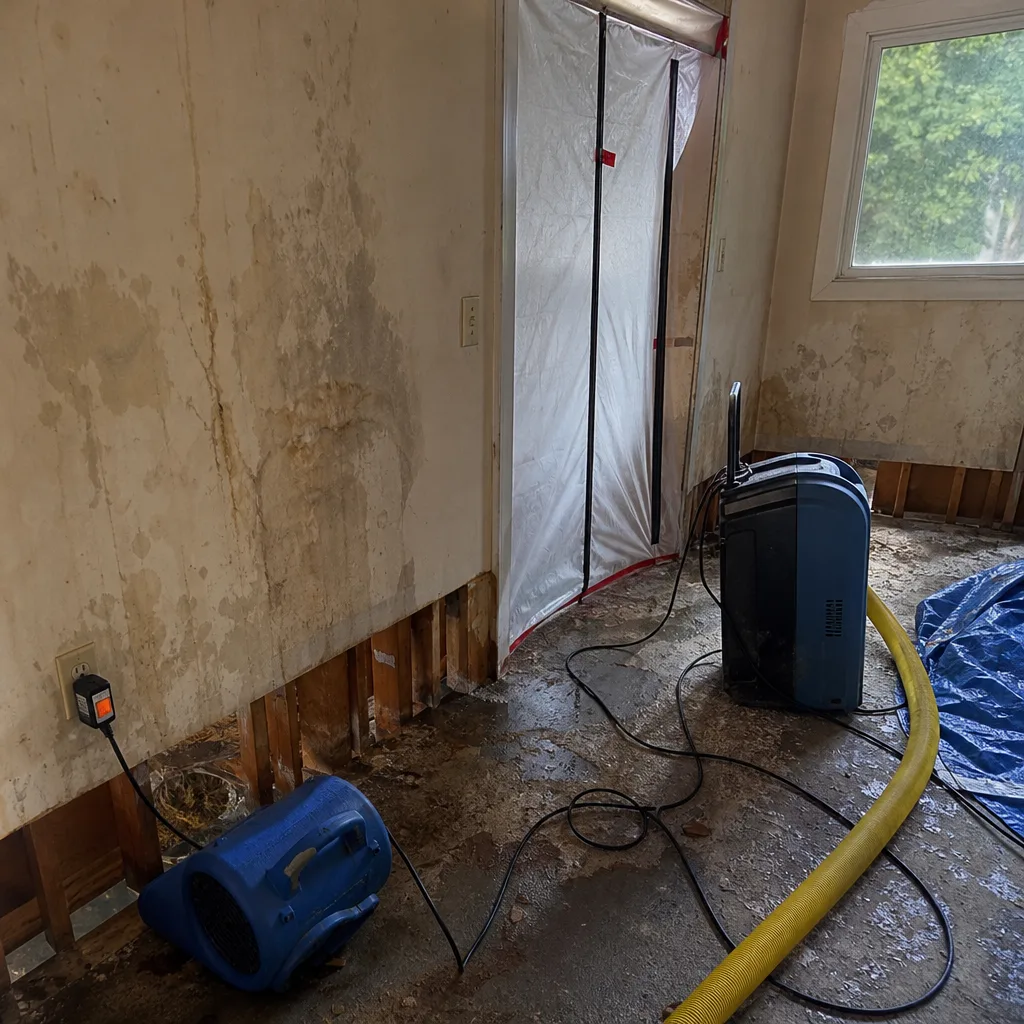 Before
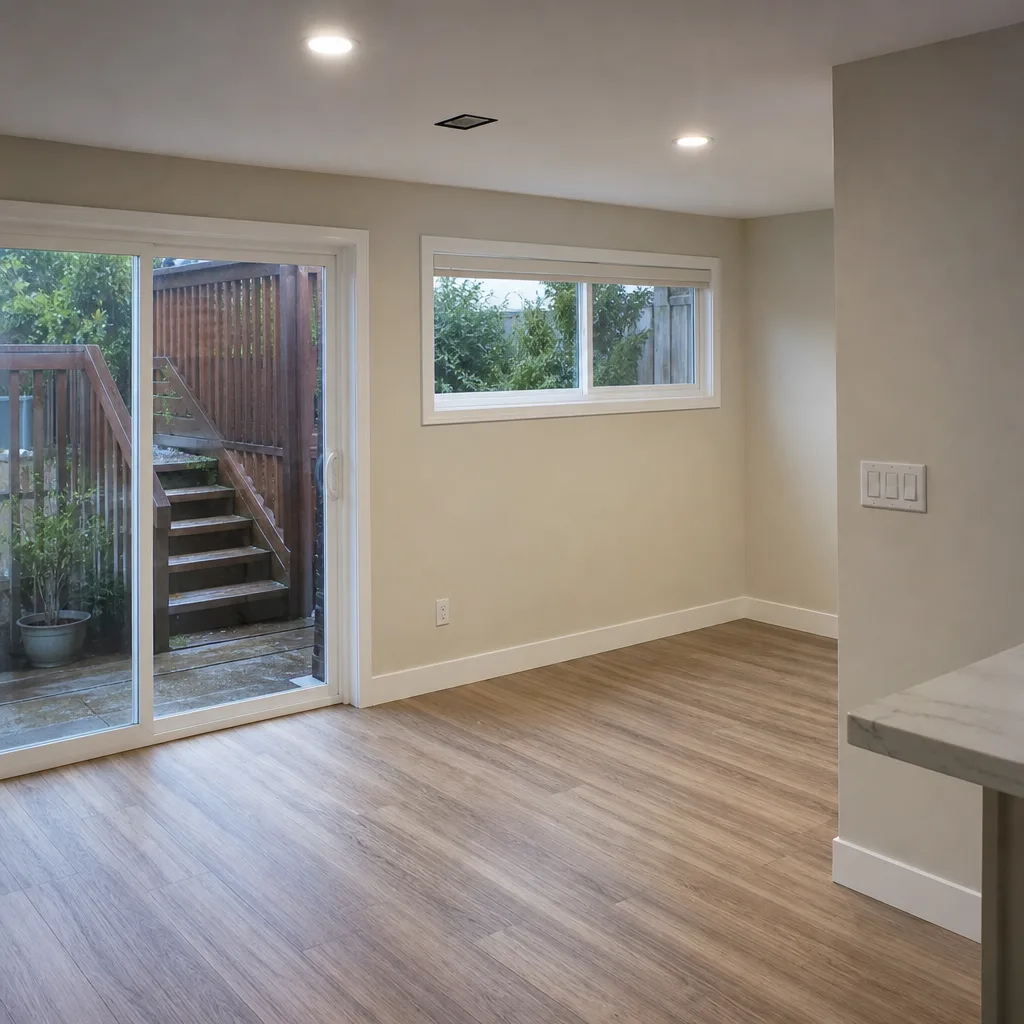 After
After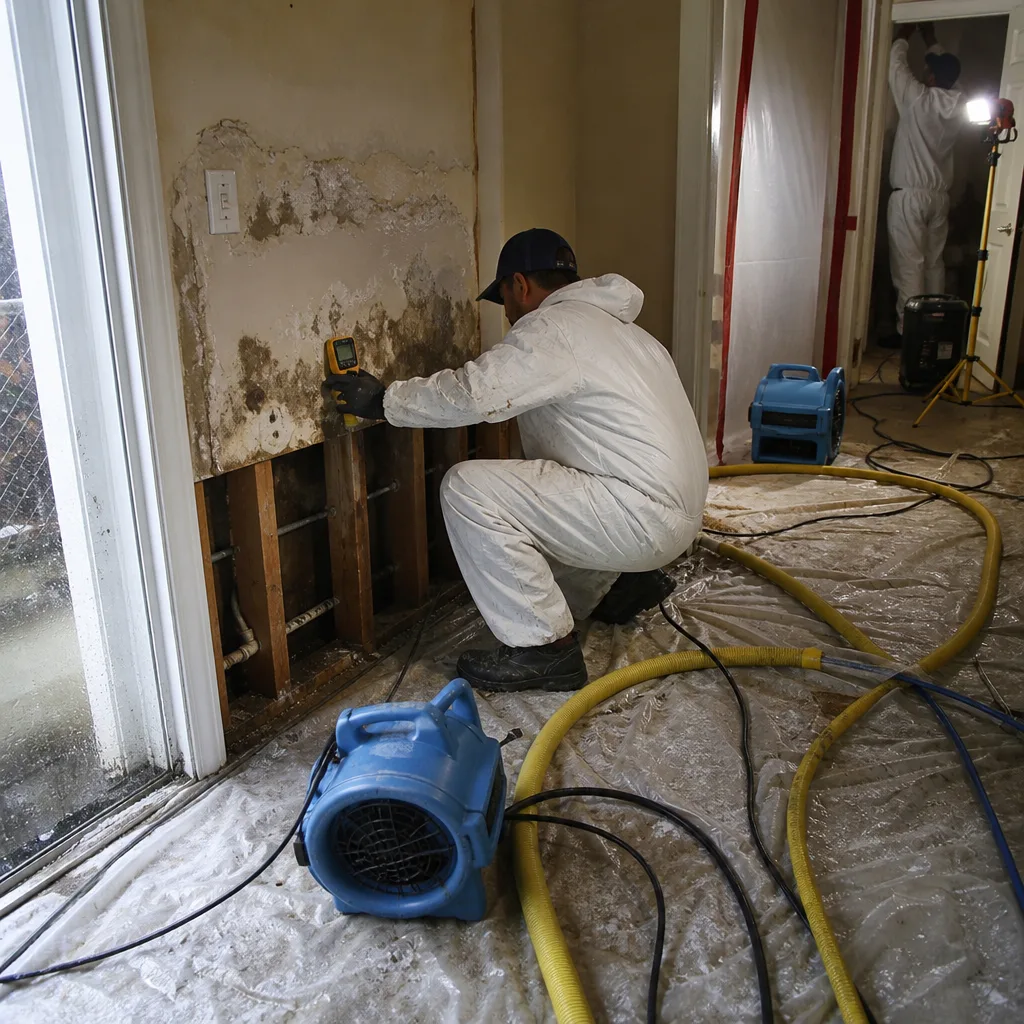 Before
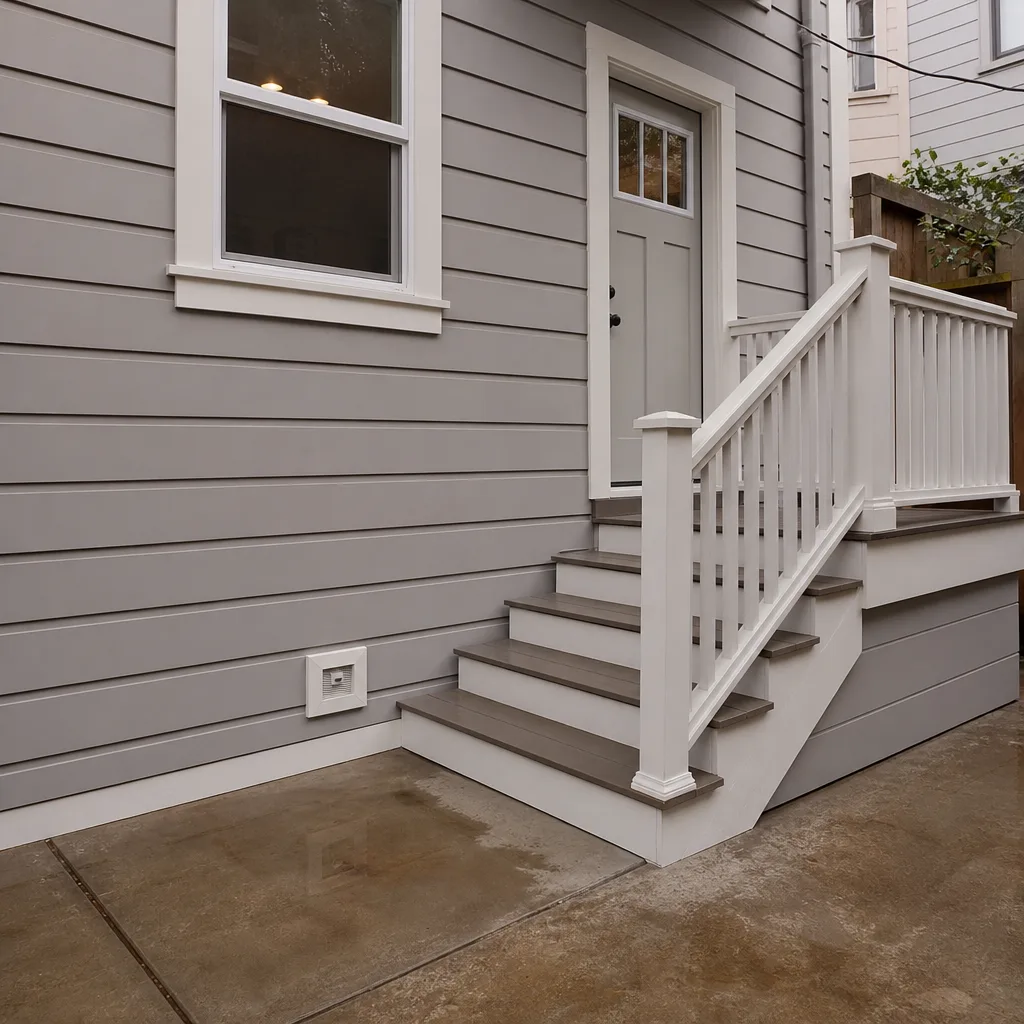 After
After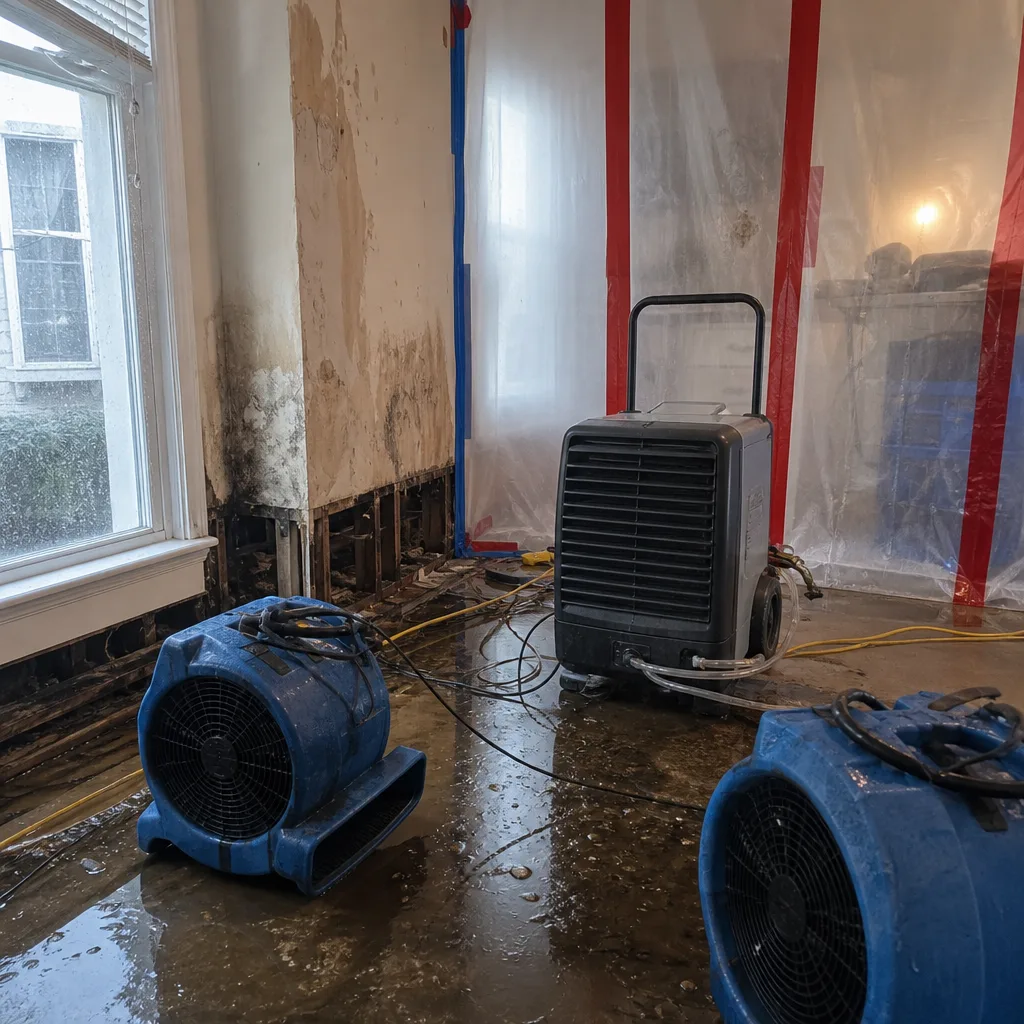 Before
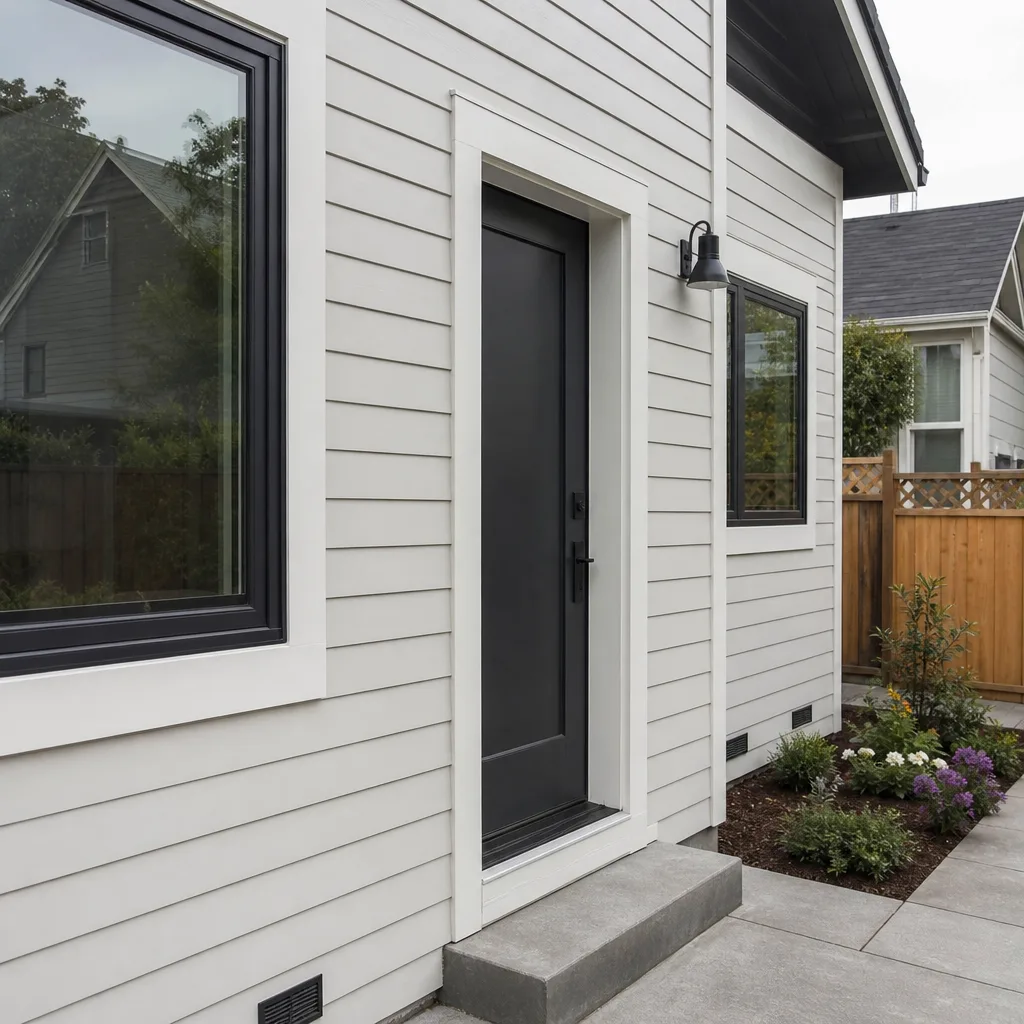 After
AfterHow Much Does Storm & Disaster Restoration Cost in San Francisco?
Storm and disaster restoration in San Francisco typically costs between $2,800 and $14,500 for most residential jobs in 2026. The two biggest variables are how far water traveled through the structure and whether Category 3 (sewage or floodwater) contamination is present. On the low end, a window leak caught early might run $1,200 to $2,400 for drying and minor repairs. A full storm surge cleanup with structural drying, mold prevention, and rebuild work reaches $20,000 or more in larger San Francisco homes.
If you’re standing in a wet living room right now, here’s the number that matters: call (831) 400-3496. A live person answers, we give you a written price before any equipment comes off the truck, and we can usually have a crew at your door the same day.
Key Takeaways:
- San Francisco storm restoration averages $2,800 – $14,500 for most single-family homes
- Water extraction and drying alone: $1,200 – $4,800
- Full structural drying with mold prevention: $4,000 – $12,000
- Fire and smoke restoration after a storm-related electrical event: $8,000 – $30,000
- Written price before work starts, every time, with no surprises on the invoice
- Live phone support 24/7. Not a voicemail, not a callback queue.
Storm & Disaster Restoration Cost Breakdown (2026)
Below are the line-item ranges we see across San Francisco neighborhoods including the Sunset, Richmond, Noe Valley, Bernal Heights, the Marina, and Glen Park. These are real working numbers from the 2026 market, not national averages. San Francisco runs 10 to 30 percent higher than the national median because of labor rates, parking logistics, and the age of housing stock here: much of the city’s single-family inventory was built between 1900 and 1940, which means plaster walls, dimensional lumber, and crawlspace configurations that respond differently to water than modern drywall-and-OSB construction.
| Service Line Item | Typical San Francisco Range (2026) | What It Includes |
|---|---|---|
| Emergency water extraction | $900 – $2,800 | Truck-mounted extraction, initial moisture mapping, furniture blocking |
| Structural drying (3 – 5 days) | $1,500 – $4,200 | Air movers, dehumidifiers, daily moisture readings; Dri-Eaz and Phoenix equipment |
| Contents pack-out and drying | $800 – $3,000 | Moving, inventorying, drying, and storing furnishings and personal items |
| Mold prevention / antimicrobial treatment | $600 – $2,200 | Pet-safe antimicrobial agents applied to affected framing and surfaces |
| Drywall removal and replacement | $1,000 – $4,500 | Cutting flooded drywall, disposal, hanging, taping, and texture to match |
| Flooring removal (hardwood, carpet, tile) | $700 – $3,500 | Careful removal of water-damaged flooring; subfloor inspection included |
| Sewage / Category 3 cleanup | $2,500 – $7,000 | Containment, full PPE protocols, disposal of contaminated materials, sanitization |
| Roof tarping / emergency board-up | $500 – $1,800 | Temporary weatherproofing to stop active water entry |
| Deodorization / air scrubbing | $400 – $1,200 | HEPA air scrubbers and thermal fogging for smoke or musty odors |
What drives a job toward the higher end is almost always a combination of three things: how long the water sat before drying began, whether multiple rooms or floors are involved, and whether the water came from outside (rain, storm surge) or from a backed-up sewer line. In San Francisco, storm water that enters through a failed foundation drain or a cracked retaining wall carries silt and organic matter, which means we treat it as contaminated even when it looks clear. That determination alone can move a job from $3,000 to $7,000 because it changes the entire protocol.
You will see a written number before we start. Not an estimate with a wink. A written price that spells out what we will do, what it will cost, and what we will leave behind when we go.
What Affects Storm & Disaster Restoration Pricing in San Francisco
Here is what actually moves the number, based on years of restoration work across San Francisco and the wider Bay Area:
- Where the water came from. A broken water heater supply line is Category 2 at worst and often runs $2,000 – $4,500. Storm water that entered through a garage door or basement window carries whatever was in the gutter, the soil, and the street, and gets treated as unsanitary. That adds containment, PPE, and disposal: typically $2,000 or more on top of baseline drying.
- How long the water sat. A leak caught within 24 hours in a Glen Park bungalow might mean $1,800 of drying. The same leak left over a long weekend becomes a mold-remediation situation, which adds $1,500 – $4,000 to the bill because we are now cutting out building materials rather than simply drying them.
- Age and construction of the house. San Francisco’s pre-1940 inventory has plaster walls, true dimensional lumber, and wood lath. Plaster wicks water slowly and releases it slowly, meaning longer drying times and more equipment days. A 1920s Richmond District home might need five days of drying where a 1990s track home in the Outer Sunset needs three.
- Flood level and square footage affected. If storm water covered 200 square feet of a finished basement, you are looking at full drywall removal, flooring removal, and subfloor drying: $5,000 – $10,000. If it covered 1,000 square feet across two floors, the number compounds because every wet room has a walkable access path that needs protection and cleaning.
- Contents handling. When water climbs above baseboard height, furniture, area rugs, books, clothes, and stored boxes become part of the job. Moving, inventorying, and drying contents adds $800 – $3,000 depending on volume. In homes where antiques, artwork, or instruments are present, we set those aside first and document their condition before touching anything.
- Access and parking. This is a real line item in San Francisco. Tight streets in Noe Valley, Russian Hill, or the Marina mean our trucks need to be parked within hose-reach and extension-cord-reach of the affected space. Long hose runs reduce vacuum pressure and drying efficiency. On some hillside jobs, we use a second crew member just to manage the hose path. That is reflected in the written price, openly.
Whatever your situation, the number you get from us is not adjusted upward because the job got hard. We price the work before we start, in writing, and we stand by it.
San Francisco-Specific Considerations for Storm Restoration
San Francisco has a climate and building profile that changes how restoration gets priced and executed. If you live here, these are the things that will show up on your invoice in one form or another.
Fog, Wind, and Rain Patterns
The city’s west side (Outer Sunset, Outer Richmond, Parkside) sees heavier wind-driven rain than the east side. Wind pushes water horizontally against siding, window frames, and parapet walls in ways that vertical rain does not. We routinely find water in west-facing wall cavities after a storm where the interior drywall looks completely fine. A tide mark is the line water leaves on a wall, and it is the first thing our technicians look for on every job. In San Francisco, that line is often not where you expect it.
Older Foundations and Basement Storm Water
A meaningful share of San Francisco homes sit on post-and-pier foundations or have partial basements with concrete floor slabs poured decades ago. Storm water enters through foundation cracks, window wells, or failed perimeter drains. When that happens, the water is carrying soil minerals and whatever was in the crawlspace, so it is treated as contaminated. Crawlspace drying and vapor barrier replacement after a storm runs $1,800 – $5,000 depending on square footage.
Hillside Street Runoff
Homes on downslope sides of streets in Bernal Heights, Potrero Hill, and portions of Glen Park can take on water from street runoff during heavy storms. A curb-level garage door is often the entry point. The fix usually involves sandbags or temporary barriers until the storm passes, then interior drying and door sealing. Emergency response for this type of situation typically starts at $1,200 and climbs based on how much water crossed the threshold.
High-Rise and Multi-Unit Storm Claims
Condo and co-op buildings in SoMa, South Beach, and Mission Bay present a different pricing structure. Water from a roof breach on the 22nd floor travels down through multiple units. Restoration requires coordination with building management, elevator scheduling, and containment across shared corridors. Per-unit drying in a high-rise storm event typically runs $2,500 – $7,000, with the cost allocated based on the governing documents. We are experienced working inside San Francisco HOAs and know how to document for shared-claim scenarios.
Storm & Disaster Restoration: Step-by-Step Process
One reason our pricing works is that the process is disciplined. If you are in the middle of a storm cleanup, here is exactly what happens when you call Tidemark Water Damage San Francisco.
- You call, and a person answers. Not a menu tree. Not a “we’ll call you back.” A live person at (831) 400-3496 hears what happened, asks a few focused questions, and dispatches a crew. If the water is still running or the ceiling is sagging, we tell you what to do safely in the next 20 minutes.
- We arrive with the truck already loaded. Shoe covers go on at the door. Drop cloths cover the floor before the first piece of equipment comes in. We name what we will protect and how: floors, stair runners, entry rugs, the hallway to the affected area.
- We give you a written price. Before we set up a single air mover, you receive a written scope of work with line-item pricing. You approve it, we begin. No work starts without that number in your hand.
- Extraction and moisture mapping. We remove standing water with truck-mounted extraction, then use thermal imaging and penetrating moisture meters to find where the water actually traveled. That is the tide mark, and we map it before we dry anything.
- Drying and daily monitoring. We place professional-grade air movers and dehumidifiers from Dri-Eaz, Phoenix, and B-Air. Crews return daily to take moisture readings and adjust the equipment layout. Most San Francisco structures need three to five days of active drying.
- Antimicrobial treatment and odor control. We apply pet-safe antimicrobial agents to framing and surfaces where there is a genuine risk of microbial growth. Air scrubbers run during and after the treatment.
- Final walkthrough and photo documentation. Before the crew leaves, we take a photo of the clean-up and share it with you. You see exactly what was done and how it was left. Our 365-Day Done Right Promise stays in effect long after that: if the restoration is not done right, Tidemark makes it right.
How to Save on Storm & Disaster Restoration
Storm restoration is not a luxury purchase, but there are still ways to control the cost without cutting corners on safety or quality. Here is what actually works in the San Francisco market.
- Call while the water is still wet. Every hour water sits in drywall, flooring, or framing, the scope of the job grows. A storm leak caught Saturday morning often dries without any demolition. The same leak found Monday evening usually means cutting wall board. A same-day call is the single biggest cost-control measure available.
- Know what your homeowner’s insurance covers before the storm. Read the declaration page now. Most California policies require prompt mitigation; if you wait and damage worsens, the insurer can dispute the additional loss. We document everything for the adjuster, and our written pricing makes claims submission straightforward.
- Don’t rent a big-box store drying fan and hope. Household fans do not generate the air volume or dehumidification capacity needed to dry a wall cavity or subfloor. What they do is buy time for mold while you wait. Professional drying is cheaper than a remediation.
- Ask about scope tiers. In some cases, we can price a job in two phases: full mitigation and drying now, with reconstruction work scheduled after you’ve worked with your insurer. You get the written price for each phase before we begin.
- Take advantage of a free estimate. We do not charge to assess the scope. Call (831) 400-3496 and we will send someone out, walk the affected area, and put a written number in front of you. If you choose not to move forward, you owe nothing for the visit.
One more thing that deserves saying plainly: the cheapest restoration bid is almost never the cheapest restoration. A crew that skips containment, uses residential dehumidifiers, or pulls baseboards without mapping moisture first will leave the job looking dry while the wall cavity stays wet. Six months later, the odor returns and the real cost arrives. The 365-Day Done Right Promise exists because Rick Sumner built this company on the belief that restoration work should still be standing up to scrutiny a year later.
How Much Does Storm Damage Restoration Cost by Scenario in San Francisco?
Here are the three most common situations we respond to across San Francisco, with real price bands for each.
Roof Leak During a Winter Storm
Heavy rain finds the gap in flashing around a skylight, a vent pipe, or a dormer. Water travels into the attic, soaks insulation, and shows up as a bulging patch on a bedroom ceiling. We tarp the roof if needed ($500 – $1,800), extract and dry the ceiling cavity ($1,200 – $2,800), replace damaged insulation ($300 – $900), and repair the ceiling ($600 – $1,600). Total for a typical single-room event: $2,600 – $7,100.
Garage Flooding from Street Runoff
A curb-level garage door in Bernal Heights or the Marina lets in four inches of storm runoff during a heavy downpour. Water soaks drywall, baseboards, stored boxes, and possibly a water heater platform. Extraction ($900 – $2,200), drywall removal and replacement ($1,000 – $3,000), drying and antimicrobial treatment ($1,200 – $3,500), and contents handling ($500 – $1,500) bring the typical total to $3,600 – $10,200.
Storm-Related Electrical Fire / Smoke Damage
Wind downs a tree limb onto the service drop, or water invades a panel and arcs. The resulting fire is often small but the smoke odor travels through the entire house. Smoke and soot cleanup for a whole-home event, including air scrubbing, deodorization, and content cleaning, runs $8,000 – $30,000 depending on square footage and how many rooms require sealing and repainting.
Does Homeowners Insurance Cover Storm & Disaster Restoration in San Francisco?
In most cases, yes. Standard California HO-3 policies cover sudden and accidental water damage from rain, wind, hail, and storm conditions. Exclusions typically apply to flood events (rising water from outside) unless you carry separate NFIP or private flood insurance. Earthquake damage is excluded under every standard policy and requires a separate California Earthquake Authority or private policy.
What matters for your claim is prompt action and documentation. We provide moisture logs, photo evidence, and a written scope of work that substantiates the loss. Adjusters work faster when the restoration contractor has already mapped the tide mark and documented the drying curve. If you’re uncertain whether your situation is covered, call us and describe what happened. We can tell you honestly what the response should look like, whether or not you choose Tidemark for the work.
Why San Francisco Homeowners Choose Tidemark for Storm Restoration
Tidemark Water Damage Restoration has worked in San Francisco since 2006 as part of the Cedarwell Care Promise network. The name is not a marketing phrase: a tide mark is the line water leaves on a wall, and finding that line, then drying past it, is the entire job. Most restoration companies stop at the visible wet spot. We chase the tide mark.
The crew that shows up at your door is background-checked, uniformed, and credentialed through IICRC, RIA, and IFA. They run drying equipment from Dri-Eaz, Phoenix, XPOWER, B-Air, and Injectidry. They put shoe covers on at the door and drop cloths down before any equipment enters. They explain the price before the work starts, not after. And before they leave, they show you a photo of the clean-up so you can see exactly how your home was left.
If you have children and pets, two things matter on a storm restoration job: whether the products we use are pet-safe where there is a choice, and whether the crew respects the household’s rhythm. We use pet-safe drying agents in rooms where animals live and sleep. We run lower-decibel equipment settings during nap time and school hours when the drying plan allows. These are not upsells. They are just how the work gets done.
FAQs – Storm & Disaster Restoration Cost
How much does storm damage restoration cost per square foot in San Francisco?
Storm restoration in San Francisco typically runs $4 to $12 per square foot for water extraction, drying, and basic repairs. Structural repairs, mold remediation, or smoke cleanup push the figure to $15 – $35 per square foot depending on the damage class. Call (831) 400-3496 for a free, in-person assessment with a written price.
Is it cheaper to repair storm damage or replace the damaged materials?
For drywall, insulation, and carpet, replacement is usually cheaper than attempting restoration. Water-damaged drywall loses structural integrity and cannot be reliably dried in place; removal and replacement runs $1,000 – $4,500 versus thousands in repeated drying attempts that often fail anyway. Hardwood flooring is the opposite: solid oak floors can often be dried and refinished for less than a full replacement. Call (831) 400-3496 and we will tell you straight what the more affordable path is for your specific damage.
How fast can you respond to a storm emergency in San Francisco?
We answer calls live, 24 hours a day, 7 days a week, and can typically have a crew on-site within one to four hours for a storm-related emergency, depending on your neighborhood and current call volume. Same-day response is standard. If you’re watching water come in right now, call (831) 400-3496 and we will walk you through the next steps while the truck is rolling.
What does storm restoration cost if mold has already started growing?
Mold remediation on top of storm-damaged materials adds $1,500 – $5,000 to a typical restoration in San Francisco. The work requires containment barriers, negative air pressure, HEPA air scrubbing, and removal of affected building materials. If you can see visible mold growth or smell a musty odor in a storm-damaged room, call (831) 400-3496 for an assessment. The earlier we get in, the smaller the containment zone.
Can you come today to look at storm damage?
Yes. Same-day assessments are available throughout San Francisco, and there is no charge for the visit. You will receive a written price before any work starts. Call (831) 400-3496 and a live person will schedule your assessment.
Do you offer free estimates for storm and disaster restoration in San Francisco?
Yes. Estimates are always free, always in writing, and always delivered before any work begins. You will know the full scope and the full price before we pick up a tool. Call (831) 400-3496 to schedule yours.
Get a Written Price for Storm & Disaster Restoration in San Francisco
If your home took on water during a storm, or you are looking at a damage situation that is getting worse by the hour, call Tidemark Water Damage San Francisco at (831) 400-3496. A live person answers, day or night. We will listen, dispatch if it is an emergency, and put a written price in your hands before any work starts.
For a broader look at how we handle storm events from first call to final walkthrough, visit our Storm & Disaster Restoration in San Francisco page. If you just want to understand the company behind the number, start at our home page.
Rick Sumner built Tidemark on a simple promise: do the work right, price it honestly, and leave the house cleaner than expected. That is what the 365-Day Done Right Promise means, and it is how every storm restoration job in San Francisco gets done.
Pricing reflects the San Francisco market as of 2026. Tidemark Water Damage San Francisco offers free estimates – call (831) 400-3496.
What Our Customers Say
"Water heater let go and flooded the garage. They treated our home so gently and were kind about how rattled I was. Dried it out right and no lingering smell."
- Wendy Ashford"Smoke damage after a small stove fire. They were considerate with our belongings, cleaned carefully room by room, and kept us updated calmly. House smells normal again."
- Nelson Pryor"Pipe burst and soaked our hallway. The crew was calm and reassuring at a stressful moment, and they were so careful moving our things to dry places. Protected the undamaged rooms with plastic."
- Francine Opell