
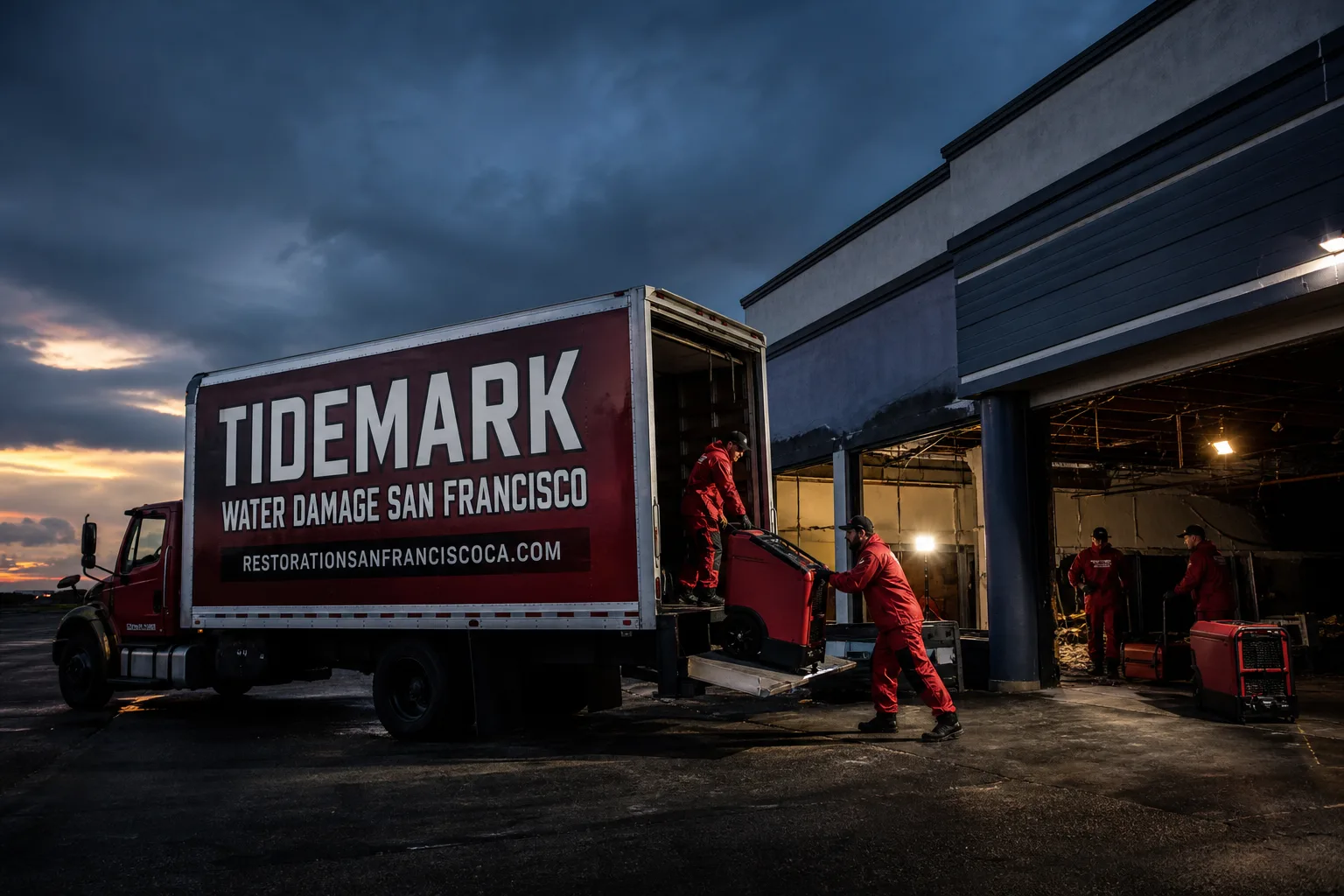
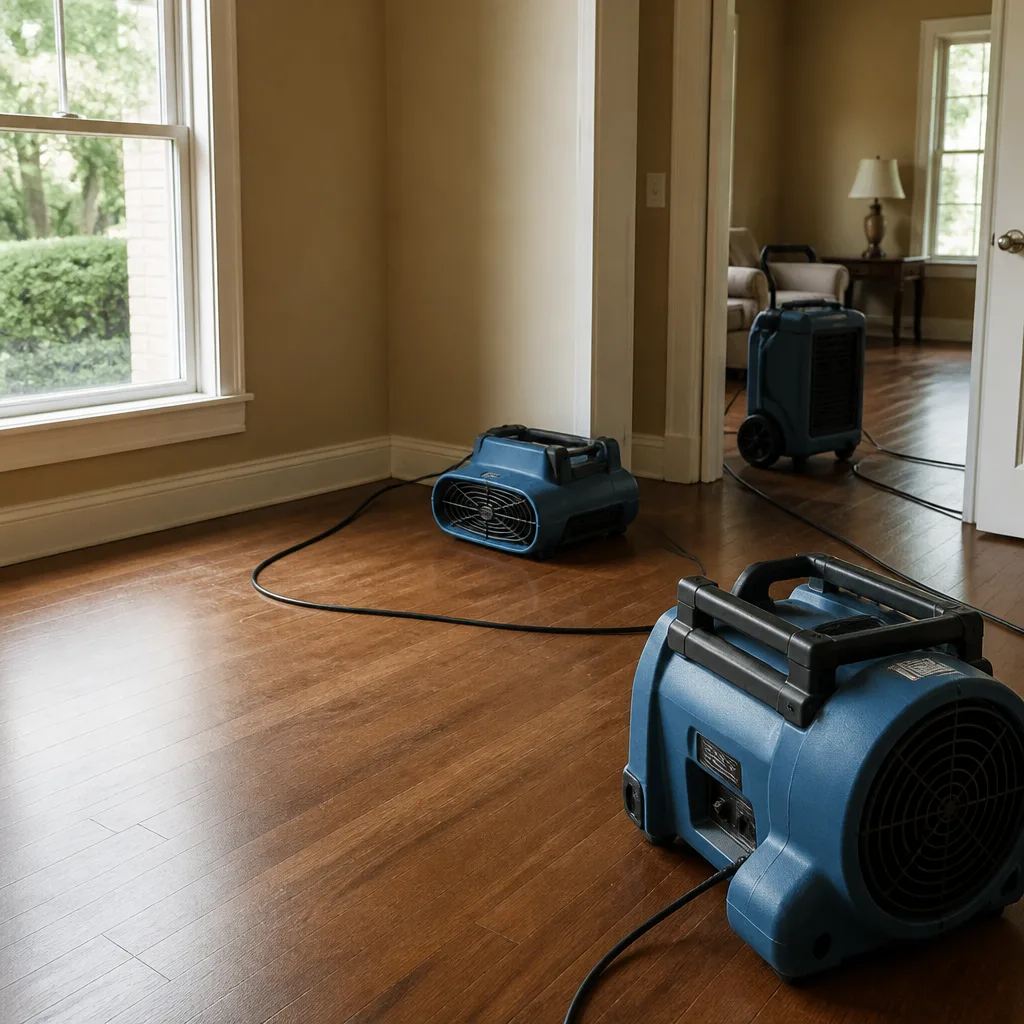
 Water damage drying
 Fire & smoke cleanup
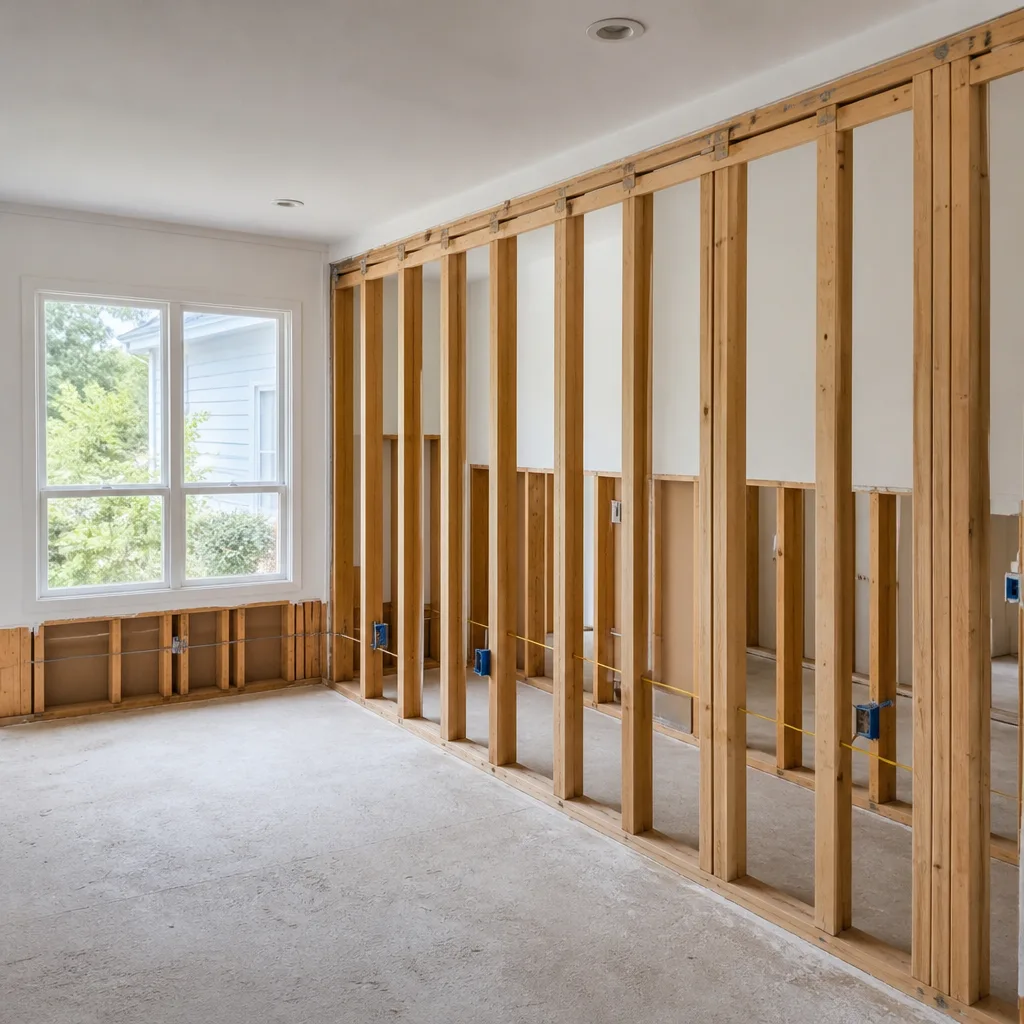 Mold remediation
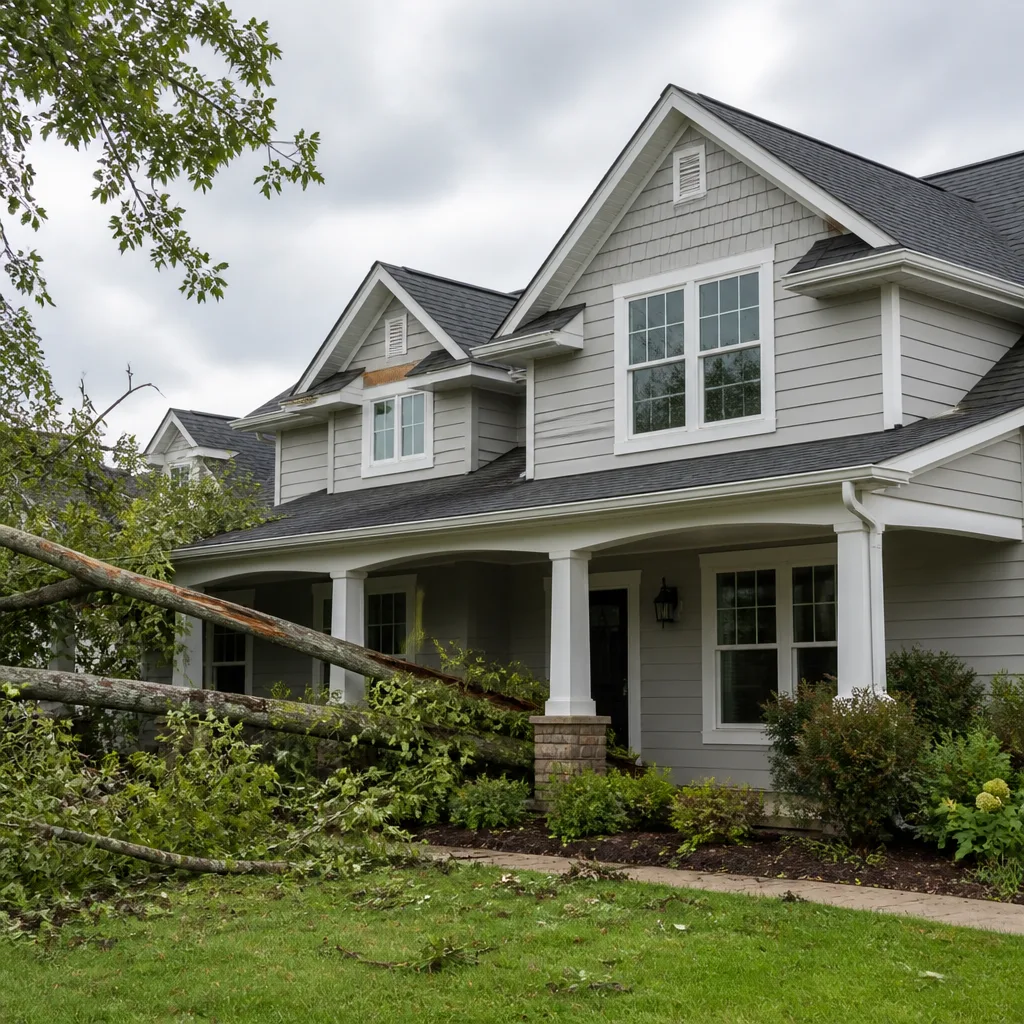 Storm response
 Sewage cleanup
 Reconstruction
Free visual inspection and a written scope of work before any mitigation begins - photos, moisture readings, and drying logs go in your claim file
The scope we write is the scope we bill. Anything new gets shown to you, in writing, before we touch it.
Get your free estimateFast, Reliable Water Damage Restoration Across Richmond
Water damage in Richmond, CA requires a crew that understands what this city’s older housing stock and coastal air actually do to a home. We respond to Richmond calls within 45 to 60 minutes for emergency water extraction, and our technicians are trained in the IICRC and RIA standards for structural drying. When water is moving through a 1940s bungalow or a hillside stucco home, the first hours decide how much framing, flooring, and drywall survives. Call (831) 400-3496 and a live person answers, any hour, any day.
Why Tidemark Water Damage San Francisco Is Richmond’s Preferred Water Damage Restoration Company
Richmond homeowners call us because we show up prepared for what this city actually throws at a house. A tide mark is the line water leaves on a wall, and it’s the first thing our technicians look for on every job. We trace exactly where the water traveled and dry past it, not just to it. That matters in Richmond, where a failed galvanized pipe behind a lath-and-plaster wall can wick moisture upward for days before anyone sees a stain.
Every job includes a written price before any work starts. Shoe covers go on at the door. Drop cloths cover the floor before the first piece of equipment comes in. Our team uses Dri-Eaz, Phoenix, and XPOWER drying equipment, and the job is covered by our 365-Day Done Right Promise. If it’s not done right, we make it right. That’s a promise we’ve stood behind since 2006.
Rick Sumner leads our crews, and he’s built the team around one standard: explain before acting, name what will be protected and how, and treat the house like a neighbor’s home. When we leave, you get a photo of the clean-up before the crew departs, so you see exactly what was done and how it was left.
Restoration work we handle
Flooded Basement in Richmond
Flooded Basement work in Richmond usually means one of two things: a seasonal groundwater problem in the flatlands around the Iron Triangle and North Richmond, or a plumbing failure in a home built before 1960. Most flooded basement jobs in Richmond run between $1,800 and $4,600 depending on how far the water traveled and whether carpet, drywall, or framing needs to come out. You see the written number before we start.
In many Richmond basements, the water isn’t the whole story. The real problem is what the water touched on the way in. Unbraced cripple walls, dirt floors, and old galvanized supply lines all behave differently once they’re saturated. We map the moisture, not just the puddle.
Crawlspace Drying and Vapor Control
Even after standing water is pumped out, a Richmond crawlspace holds moisture in the soil and framing for weeks. Marine-layer humidity slows natural evaporation. We run low-profile dehumidifiers and air movers designed for tight spaces, and we check the vapor barrier so the next winter doesn’t bring the same problem back.
Category 3 Water in Older Basements
When a sewer line backs up or a toilet supply fails, the water is Category 3 and carries bacteria. That’s a different protocol: containment, removal of porous materials, and antimicrobial treatment before drying even starts. In an old Richmond basement with a dirt floor, we remove the contaminated soil layer and treat the remaining surface.
Water Extraction in Richmond
Water Extraction in Richmond is the first step, and it has to happen fast. In homes along the bay, standing water doesn’t just soak the floor, it finds the cracks and seams that older construction is full of. Most water extraction jobs in Richmond run $900 to $2,800 for a single room, with larger flooded areas running higher. The written estimate comes before any equipment enters the house.
Our crew responded to a flooded basement in an Iron Triangle bungalow where a 1940s galvanized supply line burst, sending Category 3 water through original lath-and-plaster walls. We set up containment, ran Dri-Eaz LGR dehumidifiers and XPOWER air movers, and performed moisture mapping that revealed elevated readings in the unbraced cripple wall cavity. After pack-out and structural drying, we coordinated with a licensed asbestos abatement contractor to remove the damaged asbestos-wrapped plumbing before restoring the space to pre-loss condition.
Extraction Before the Walls Wicked
Lath-and-plaster walls are thirsty. Water wicks upward fast in Richmond homes built before the 1950s because the plaster is porous and the framing is old-growth lumber that absorbs moisture deeply. Getting extraction equipment on site within the hour often means the difference between drying the wall cavity and cutting it open.
What We Get Out and What We Leave In
We remove standing water first. Then we pull the pad, cut the carpet, and mark the walls for drying or demo based on moisture readings, not guesswork. In Richmond’s older homes, we protect what’s original whenever we can; plaster is often worth saving, and we’ll tell you straight if it isn’t.
Trusted Brands We Service in Richmond
Richmond homeowners bring us equipment they already trust, and we know how to work with it. We service and dry behind a range of systems, and we stock common parts and panels for Richmond-area jobs so turnarounds happen quickly. When replacing components, we prefer galvanized and coated springs, stainless hardware, and nylon rollers that hold up better against salt air than standard hardware, plus injectidry systems for hard-to-dry wall cavities. Our IICRC, RIA, and IFA credentials mean the drying plan we write is based on industry standards, not habit.
See the difference
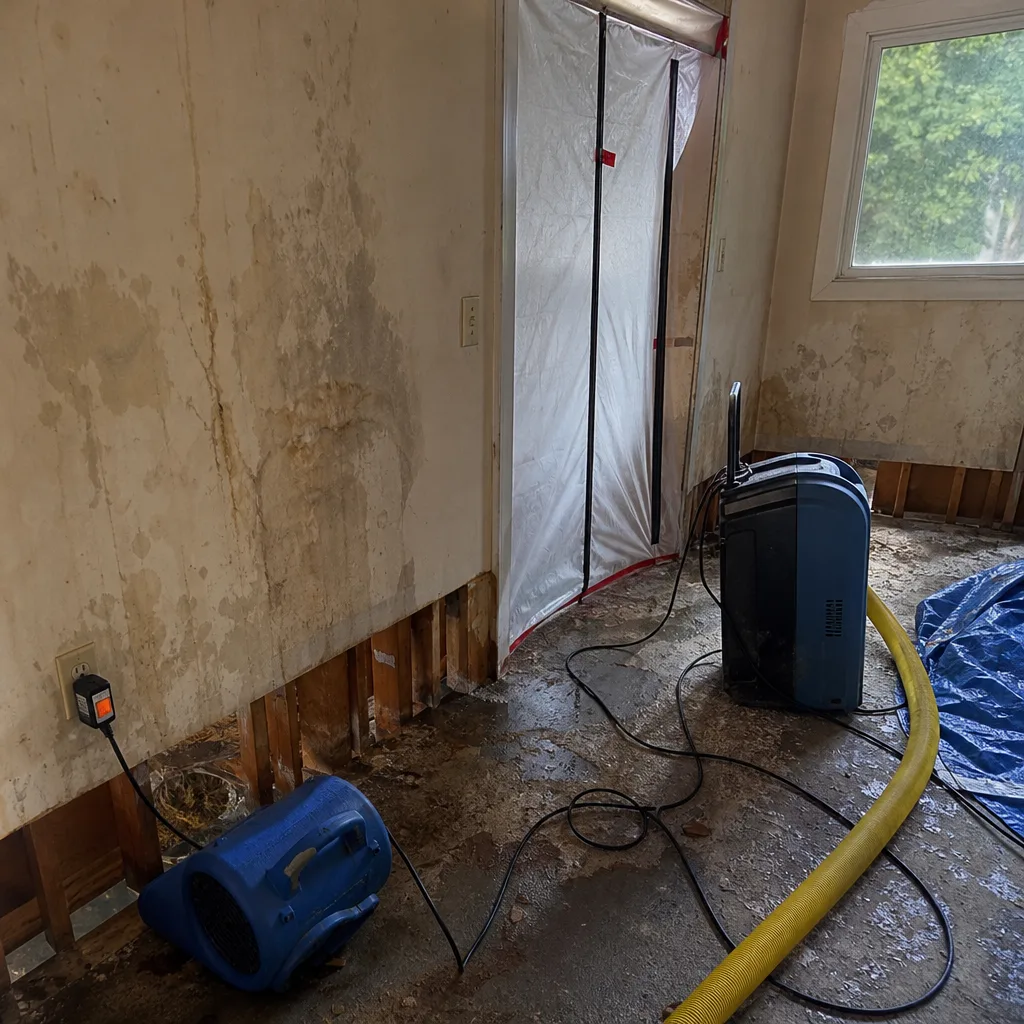 Before
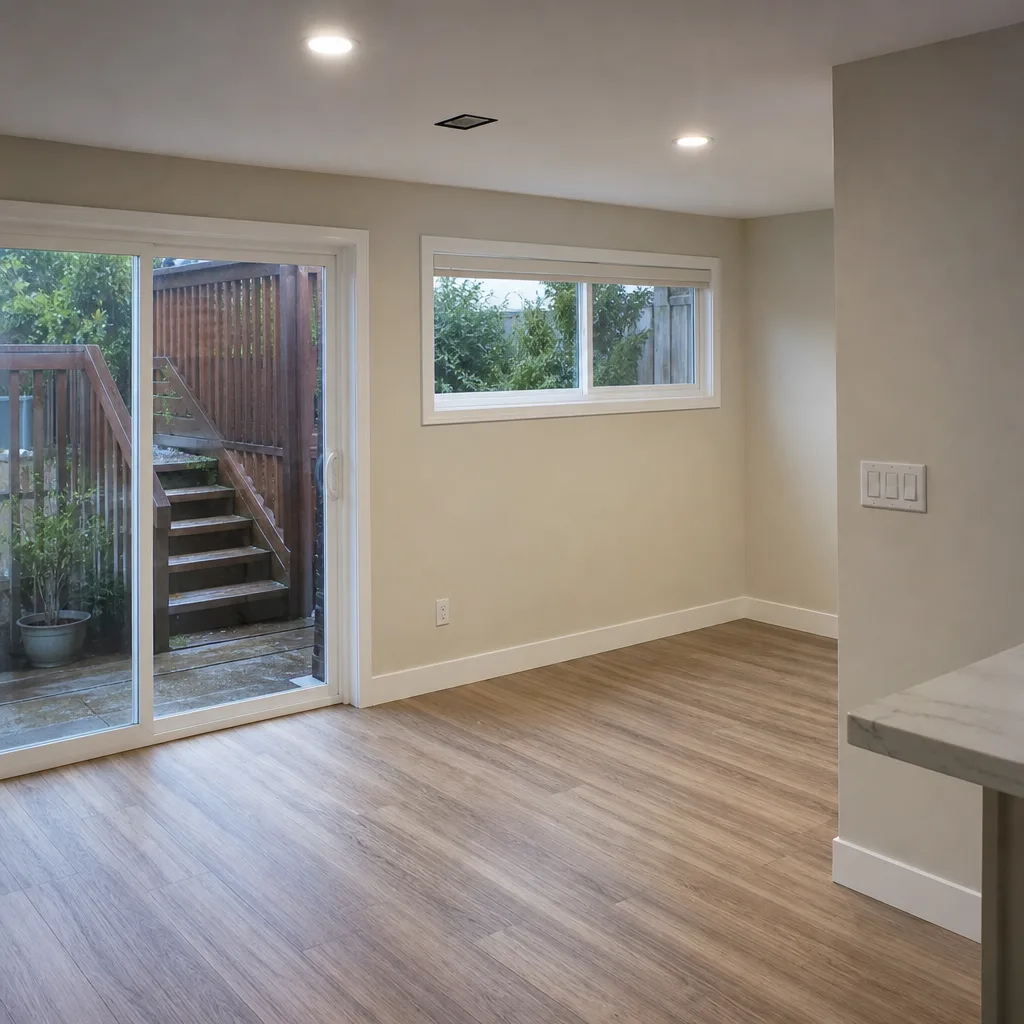 After
After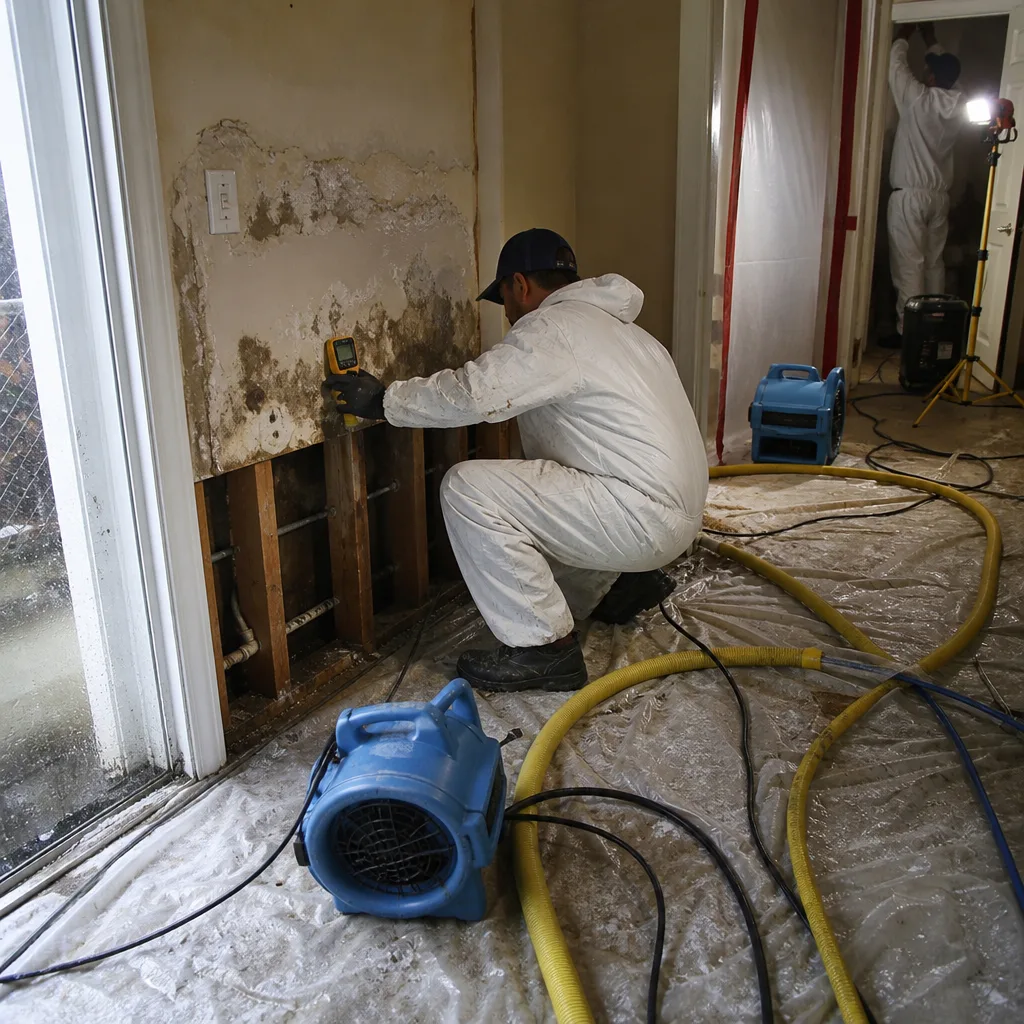 Before
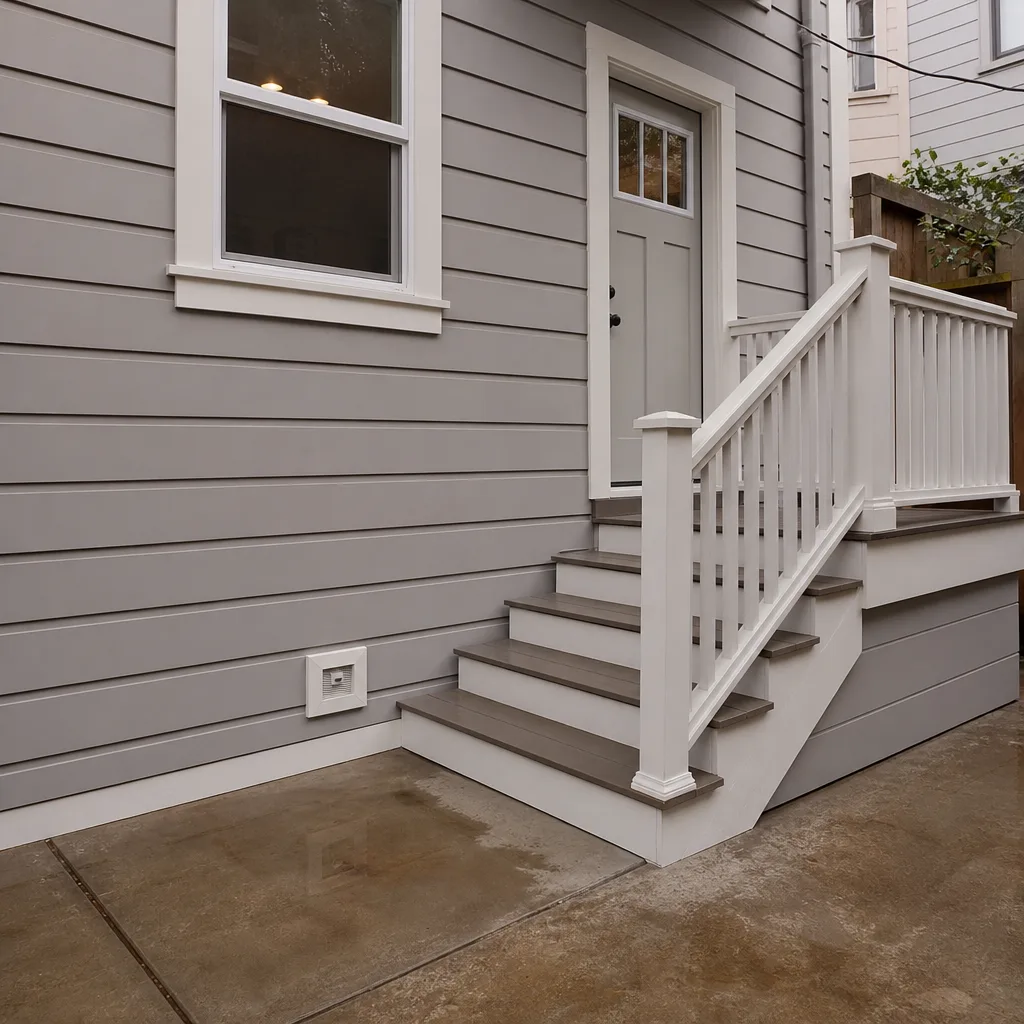 After
After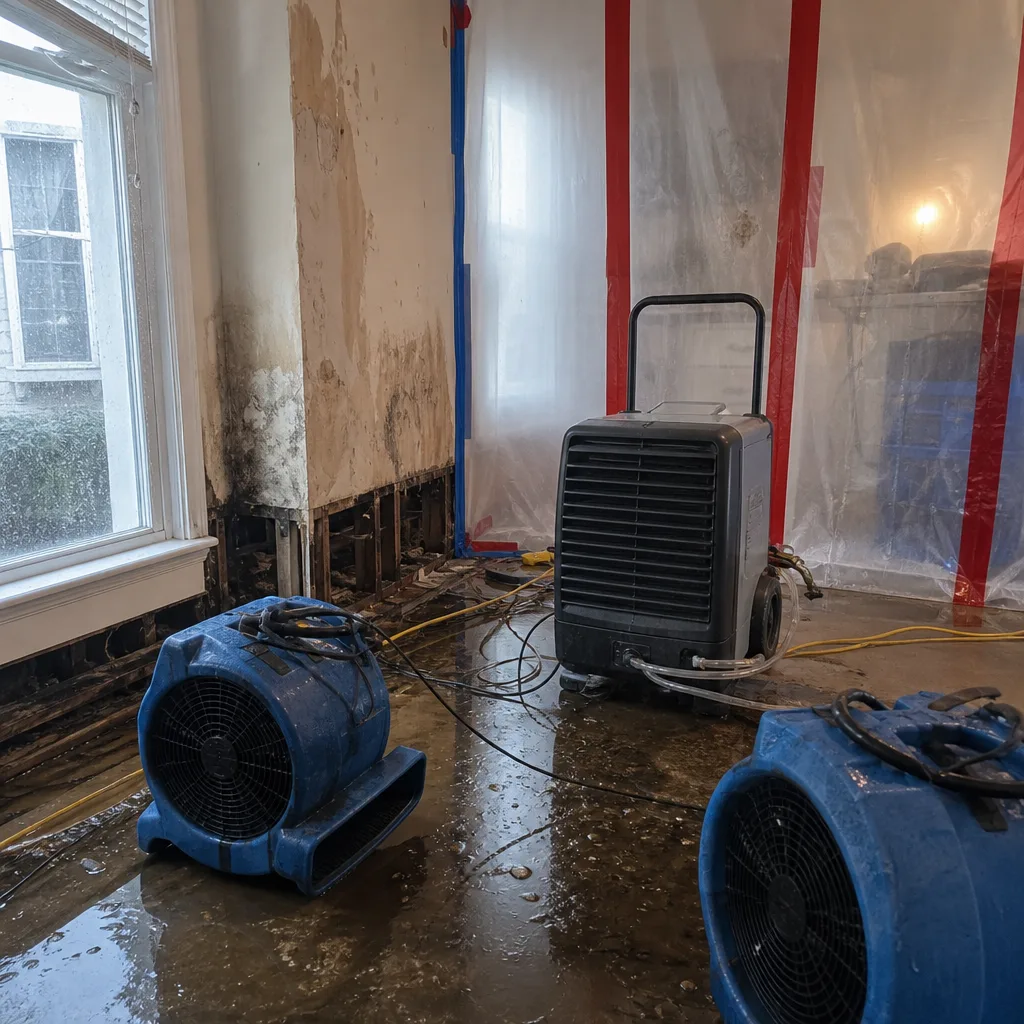 Before
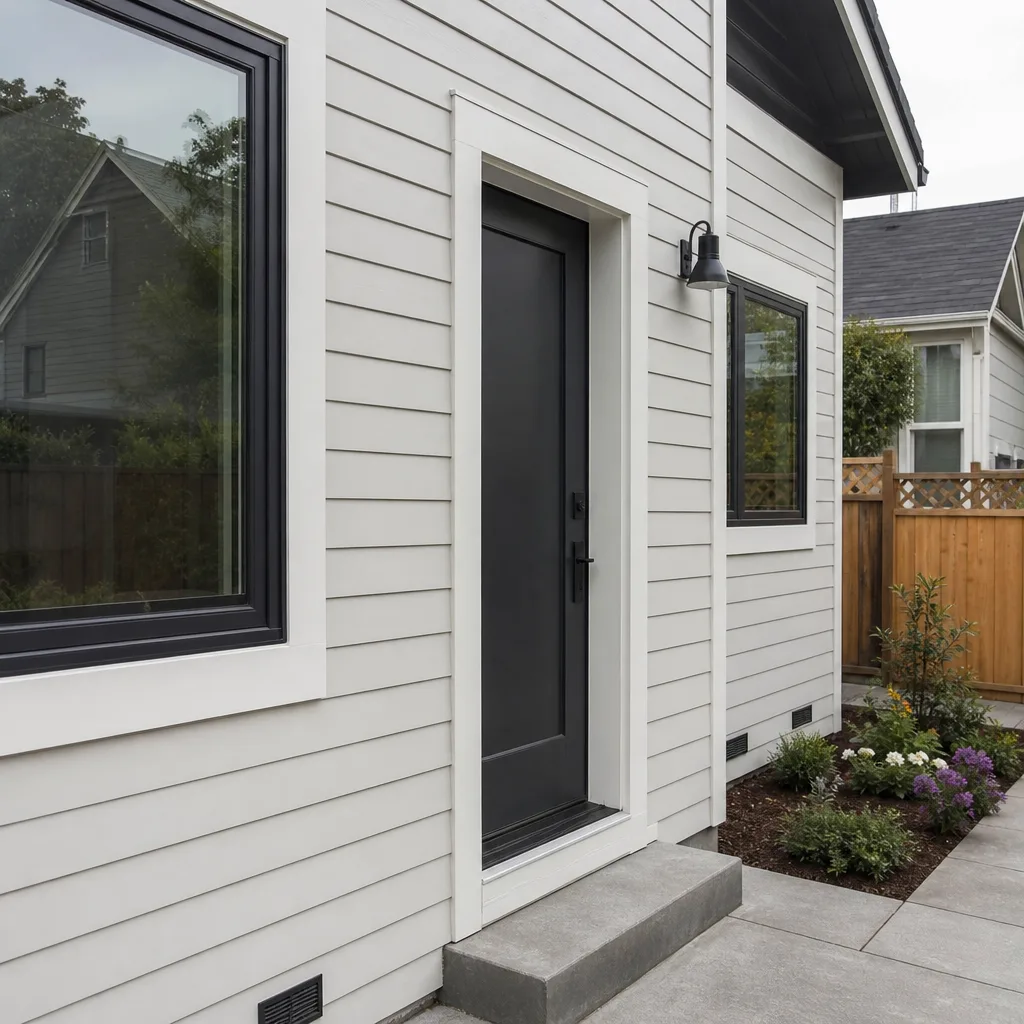 After
AfterCommon Water Damage Restoration Problems We See in Richmond Homes
- 1940s galvanized plumbing failures in Iron Triangle and North Richmond homes. Salt air and six-plus decades of use corrode supply lines until they split behind walls. We contain the damage, coordinate asbestos abatement when needed, and dry the structure properly.
- Damp crawlspaces that never fully dry. The marine layer keeps crawlspace humidity high year-round. Without mechanical drying and a good vapor barrier, the same mold and rot come back every winter.
- Flat roof leaks on older commercial buildings. Richmond’s rainy season tests aging flat roofs, and water that enters through the roof hides in ceiling cavities and stucco walls before anyone notices a stain.
- Water intrusion behind stucco finishes. Mid-century stucco homes trap moisture behind non-breathable finishes. We use Injectidry systems and targeted drying to reach those wall cavities without tearing off the entire face.
Pricing for Water Damage Restoration in Richmond, CA
Here’s honest pricing for Richmond’s market. Emergency water extraction for a single room runs $900 to $2,800. Full structural drying of a flooded basement with Category 3 water runs $1,800 to $4,600. A burst pipe restoration behind lath-and-plaster walls with asbestos abatement coordination runs $3,200 to $7,500 depending on how much wall must be opened and how much pipe is replaced. A ceiling leak from a flat roof runs $1,200 to $3,400. You get a written price before any work starts, and the estimate is free. Call (831) 400-3496 and we’ll tell you exactly what we see and what it costs.
We Also Serve Cities Near Richmond
Our Water Damage Restoration team serves Richmond and the surrounding East Bay communities. That includes Berkeley, San Rafael, Piedmont, and San Francisco. If you’re dealing with water damage anywhere in the area, call us and we’ll get a crew to you.
Serving Richmond, CA - Our Local Coverage Area
We’re based in the Richmond area and know this community well. Use the map below to see our service coverage - if you’re nearby, we can almost certainly help.
FAQs About Water Damage Restoration in Richmond
Salt air accelerates corrosion on galvanized pipes, valves, and fittings, which means Richmond homes see more sudden pipe bursts than inland homes of the same age. The restoration itself also requires more thorough drying because the air’s moisture content slows evaporation. We account for both on every Richmond job.
Shut off the water at the main, call us at (831) 400-3496, and do not touch the pipe or the surrounding wall material. Homes from that era often have asbestos-wrapped plumbing. We coordinate with a licensed asbestos abatement contractor, contain the work area, and do not begin demolition until the material is tested and handled properly.
Richmond’s marine layer keeps crawlspace humidity high, and once soil under a home is saturated, it releases moisture back into the air for weeks. Extraction removes standing water, but drying the soil and framing requires mechanical dehumidification and a proper vapor barrier. We do both as part of structural drying.
In many cases, yes. Plaster wicks water upward, but with Injectidry systems and careful moisture mapping, we can dry wall cavities without full demo when response happens early. If readings stay elevated after drying attempts, we recommend targeted removal and repair rather than losing the entire wall. Call us for an honest assessment.
We treat it as a biohazard. That means containment, removal of all porous materials, removal of the contaminated soil layer, antimicrobial treatment, and then structural drying. In Richmond basements with dirt floors, the soil removal step is critical; skipping it leaves the contamination in place. Estimates are free, and we’ll walk you through the written scope before work starts.
Written by Rick Sumner, Owner at Tidemark Water Damage San Francisco, serving Richmond, CA.